Not A Normal Market

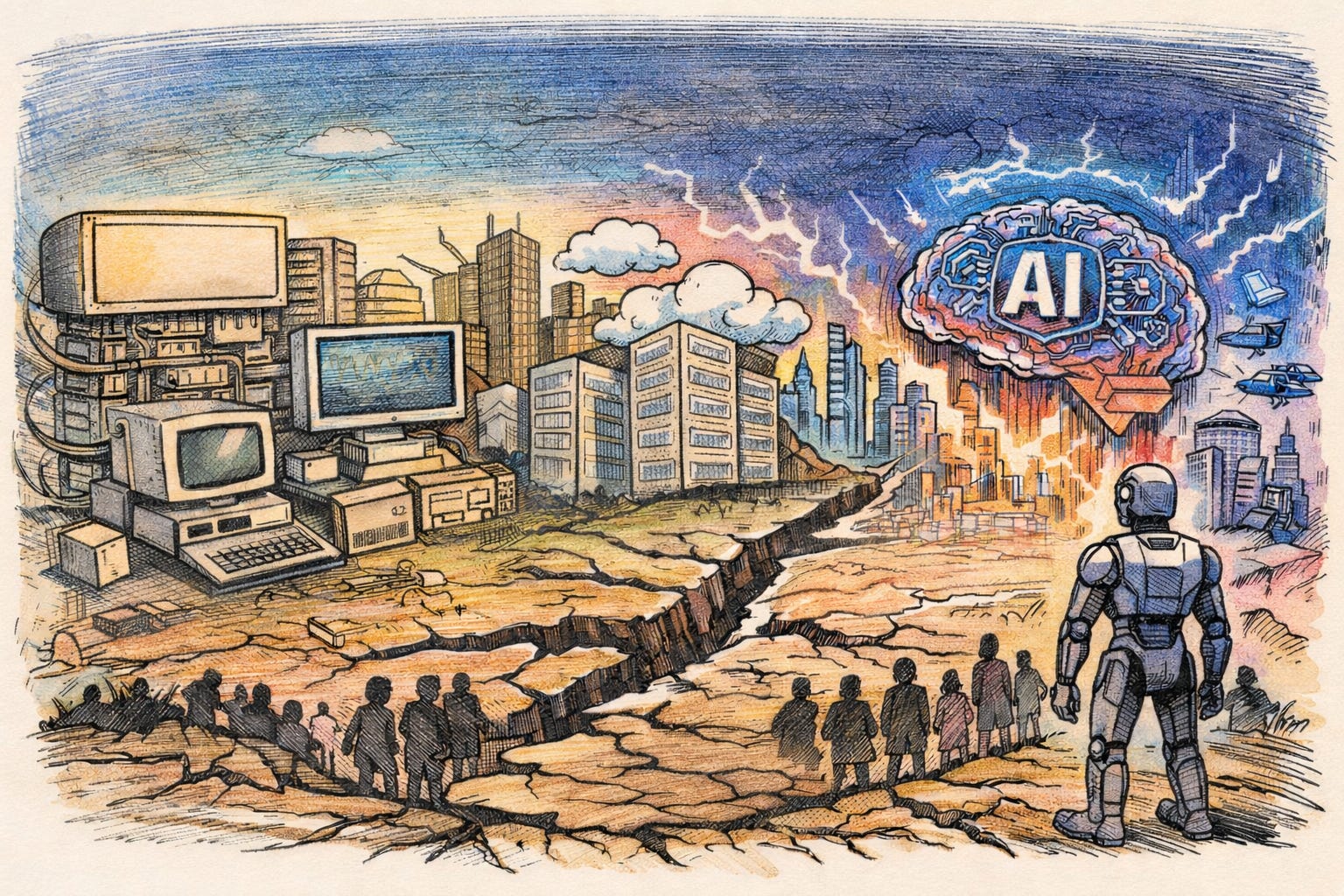
Only about once a decade does the technological ground shift. The ARPANET in the late 60s, which laid the groundwork for the modern Internet. The microcomputer revolution in the 70s and 80s, which put a PC on every desk and in every home. The World Wide Web in the 90s, which made the Internet accessible to everyone and birthed the dot-com boom. The rise of broadband and network equipment in the 90s and early 2000s, which made high-speed connectivity ubiquitous. And the emergence of cloud computing and SaaS in the 2010s, which transformed how software is delivered and consumed.
We are living through the mother of those transitions now with AI. Large language models and AI systems have, in just the last few months, crossed critical thresholds in their abilities. Capabilities that seemed like science fiction a year ago are suddenly here. It feels like we’ve jumped a decade ahead in progress.
If you’re a founder, this is the moment you dream of. Technical paradigm shifts on this scale come rarely. When they do, they tend to birth a cohort of companies that define the decades that follow. Intel and Microsoft in the 70s and 80s, Cisco in the 80s and 90s, Amazon and Google in the 90s and 2000s, Facebook and Salesforce in the 2000s. And now Nvidia, the three-decade sleeper. Who will be the other giants that emerge from the AI explosion?
I suspect they will be the companies with a few characteristics: those pursuing the most ambitious visions, those experimenting at the frontier, inventing a new way of interacting with technology, and those companies who recognize what a special moment in time it is. It is challenging to really reason as if you believe in continued capability progress, even when you do. It is challenging to reason about the pace of change. These winning companies may not be the first ones.
So if you’re working on something in AI right now, ask yourself - what’s the most ambitious version of this? What will be possible next year? We see too many startups undershoot in their capability predictions. We hope to see more startups overshoot. There were plenty of people building online stores in 1994, but only Amazon had the audacity (and understanding) to think they could be “Earth’s biggest bookstore” and beyond.
And if you’re not currently working on something in AI, perhaps you should be. The next few years are a one-time window where the world feels more malleable than it has been in decades. An important initial finish line (parity with humans?) feels just a few years out, and figuring out the infrastructure and killer apps of this paradigm shift is perhaps the most ambitious thing anyone in tech can be doing right now.
It’s never one big jump. The future always arrives gradually, then suddenly. We’ve been in the gradual phase of ML for the last decade. Now we’re entering the sudden phase – with deep learning at scale, and the concentrated application of intellectual energy. Tectonic plates that have been slowly shifting are about to collide. Will you be in a position to ride out the quake and build something enduring in its aftermath? If there was ever a time to be maximally ambitious, it’s right now. This is not a normal market.